
Mosaic Colorwork Knitting Made Simple: An Essential Beginner’s Guide
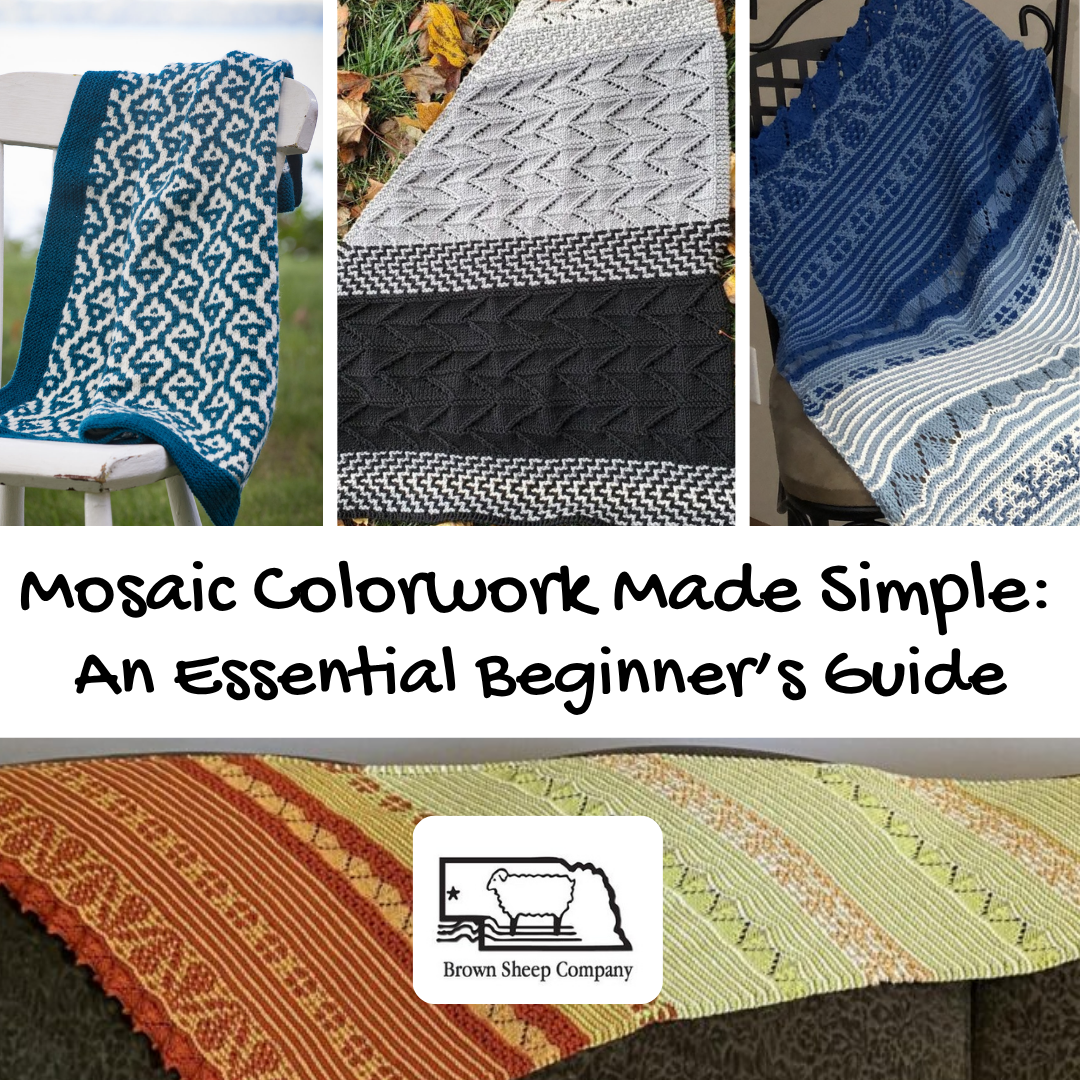
Mosaic Colorwork Knitting Made Simple: An Essential Beginner’s Guide
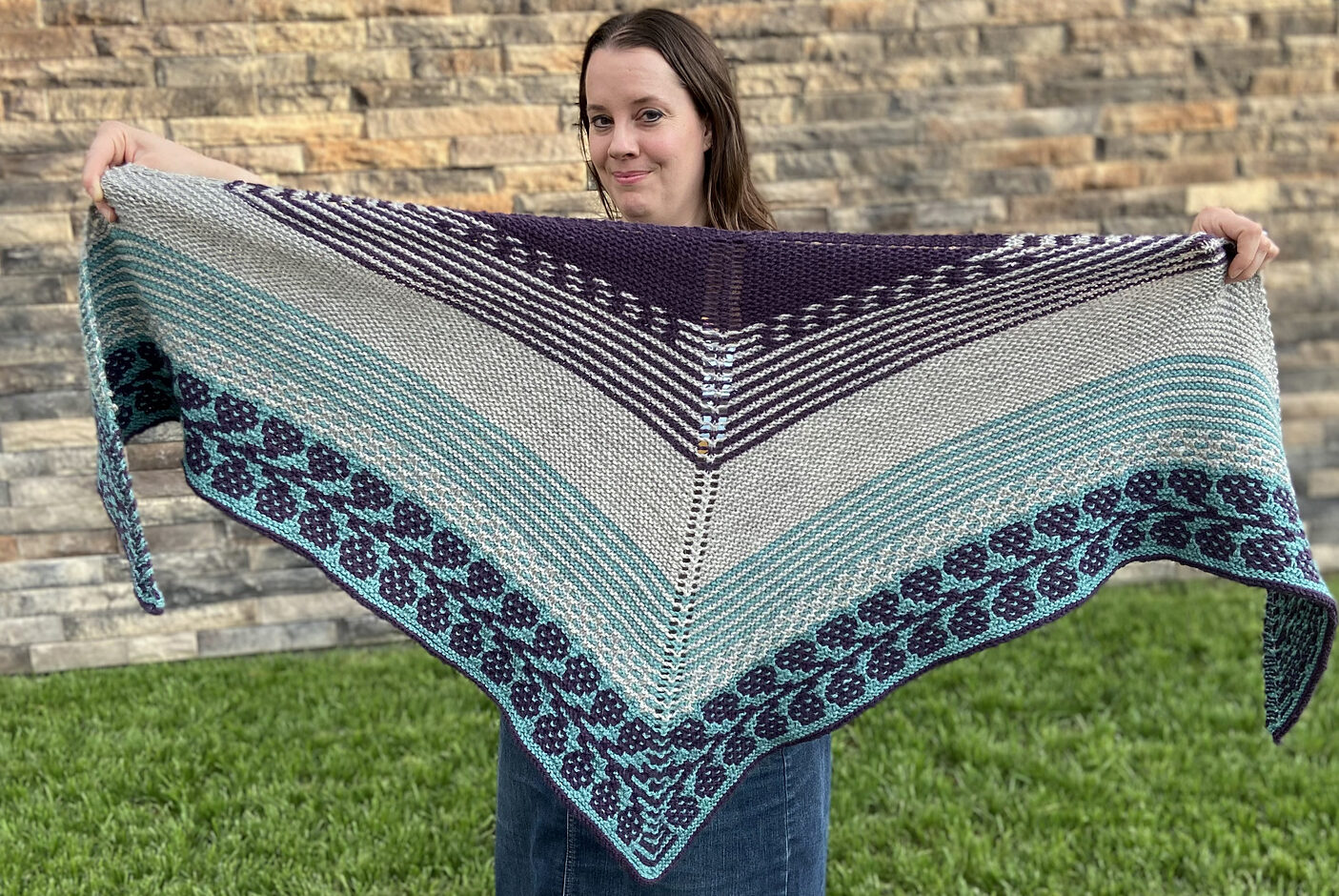
The Brown Sheep Spring Mystery Knit Along launched late last month with Olya Mikesh’s Mosaic Magic Shawl. As the name suggests, Olya’s Mosaic Magic Shawl features mosaic colorwork knitting, a technique we’ve featured in several previous knit alongs. Mosaic colorwork knitting is one of our favorite colorwork techniques. It’s approachable for beginners to colorwork and beginners to knitting in general. If you’ve never knit with more than one color at once, mosaic colorwork is the perfect entry point for learning essential colorwork knitting skills like tensioning, managing more than one ball of yarn, and the importance of contrast.
This guide will teach you all of the essentials for mastering mosaic colorwork knitting. Read it, and then join us for the Mosaic Magic Mystery Shawl Knit Along! We’re offering free shipping on Lanaloft and the Lanaloft kits we designed for the MKAL until May 19 with code MKAL26!
What is Mosaic Colorwork Knitting?
Mosaic colorwork knitting is a technique where two contrasting colors of yarn are knit to create colorwork patterns. It differs from techniques like intarsia and stranded colorwork in that only one color of yarn is ever knit at one time.
This defining factor is what makes mosaic colorwork so beginner friendly. Knitters do not need to hold or carry two yarns at once to achieve seemingly complex colorwork designs. A single color is worked across one row and back (if worked flat), and then a second color is worked, with select stitches of the first color slipped instead of knit to create the pattern.
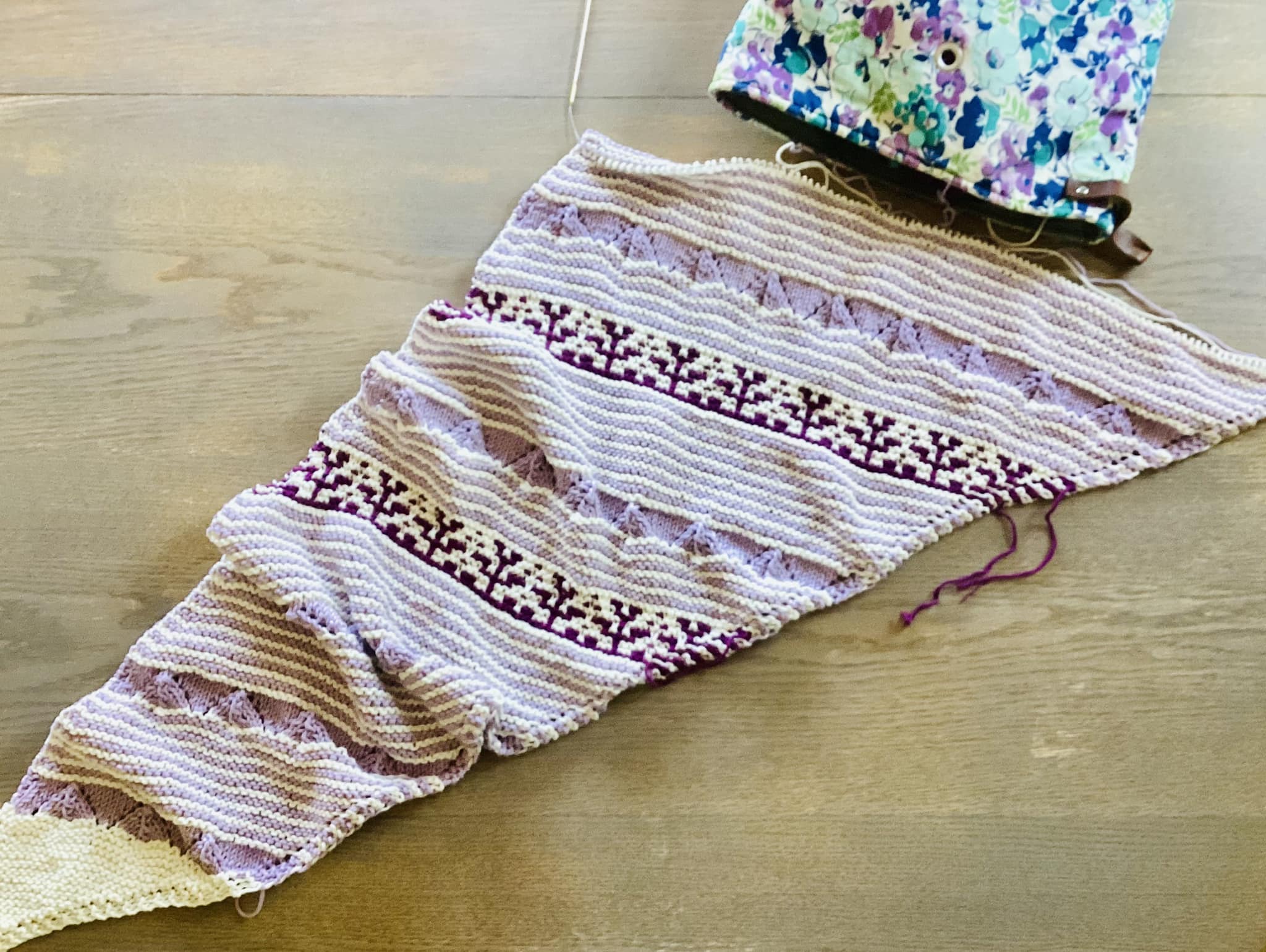
Note the magenta branching up across the backdrop of white stitches in the second clue of Olya Mikesh’s Spring Meadow Shawl from 2024 (above). In this case, the dark magenta is knit across one row on the right side, then knit back across on the wrong side. Then, the white yarn is knit across on the right side, and select stitches of the dark magenta yarn are not knit, but instead slipped to draw the dark magenta up amidst the white yarn. On the wrong side, the white stitches are worked and the dark magenta stitches are slipped again (more on that in our next section!)
(Usually True) The Color You’re Knitting With Changes Every 2 Rows
More contemporary or advanced mosaic colorwork patterns or patterns in the round may not follow this rule, but the majority do: colors usually only switch every two rows.
This means if you knit across with one color on the right side row, you’ll either purl or knit across with the same color on the wrong side row. This makes your wrong side row very easy to follow—you probably don’t even need to look at the pattern! When you come across stitches in the color you’re knitting, knit (or purl) those stitches. When you come across slip stitches, slip those stitches. We told you mosaic colorwork was easy!
Always Slip As If To Purl
This tip is simple, and good to remember. Mosaic colorwork relies on slipped stitches, so you have to make sure to slip all of your stitches the same way. And, correctly!
- On right side rows: slip as if you are purling with the yarn held in the back
- On wrong side rows, slip as if you are purling with the yarn held in the front
You will always slip stitches as if to purl. Whether your yarn is held in the front or back depends on whether you are looking at a right or wrong side row.
Be Mindful of Your Tension
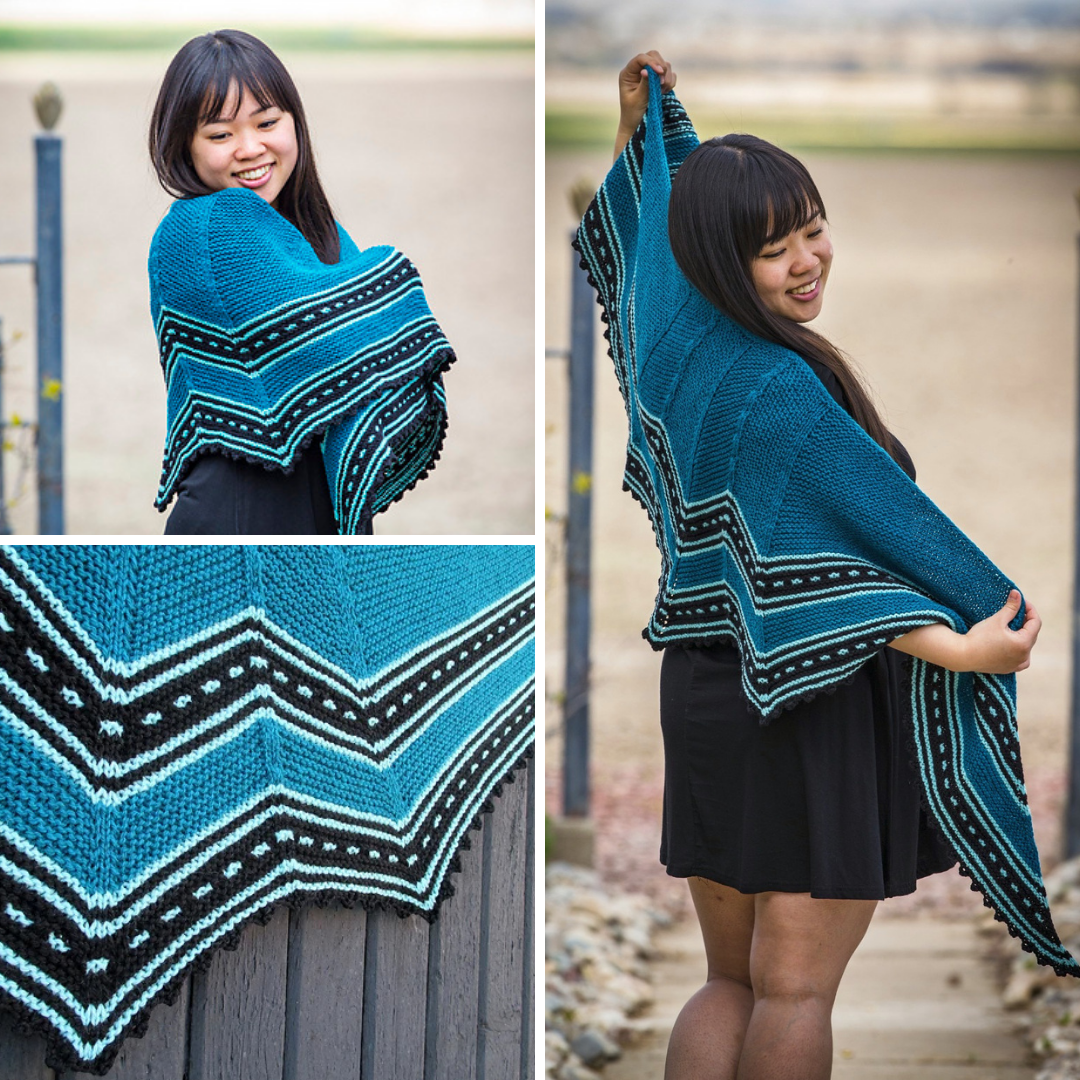
Because you’re slipping stitches to create the colorwork patterning, it’s very important to be mindful of your tension. The yarn you’re knitting with will “float” behind the unworked slipped stitches. Every time you slip a stitch, you create a float. If you slip multiple stitches, your float needs to be adequately tensioned and proportional to the number of stitches you’ve slipped. Your yarn needs enough slack to travel behind the slipped stitches without puckering.
Achieving good tension takes practice. Be mindful about spreading your stitches out on the right needle as you’re working them, to ensure your floats have a little give to them.
Twist the Yarns When Changing Colors

Mosaic colorwork makes it easy to work with multiple colors because you only knit with one color at a time. However, it’s still a good practice to keep the area where you will switch colors as neat as possible. This will most likely be the right edge of your knitting.
Remember to twist your yarns together when you drop one color to start knitting with the other. A simple twist will keep your right edge neat and tidy, without loose vertical floats of yarn hanging at the side.
Choose Colors with High Contrast
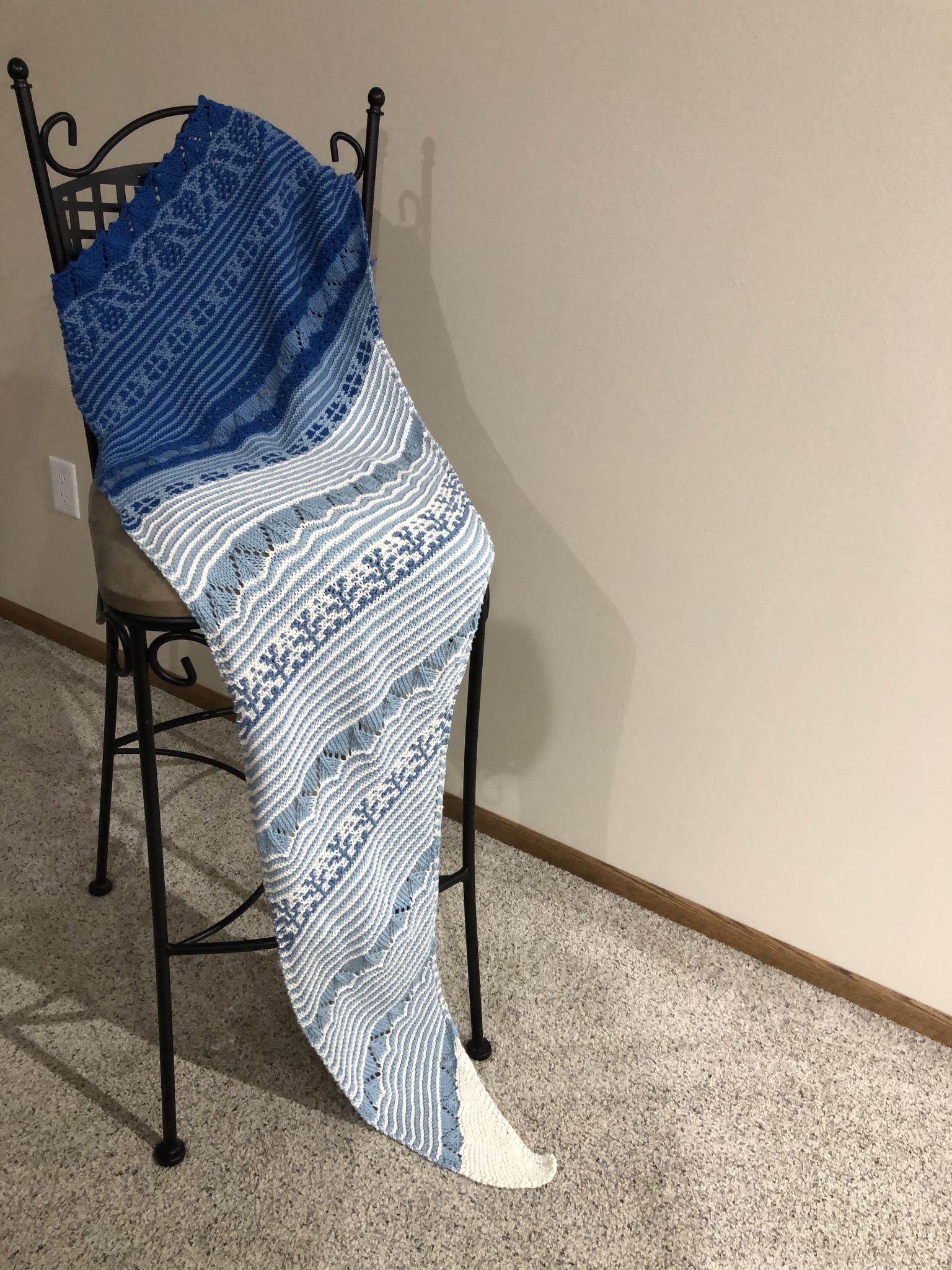
If you’re knitting colorwork, you want contrast. It’s essential to have good contrast between your colors when doing any kind of colorwork—including mosaic. Otherwise, your patterns won’t be crisp, clean, and visible.
If you need help choosing colors, check out 7 Helpful Tips for Colorwork Knitting & Crafting with Color. We talk about color theory, tips for discovering high contrast color pairings, and how to use the color wheel to discover great color schemes.
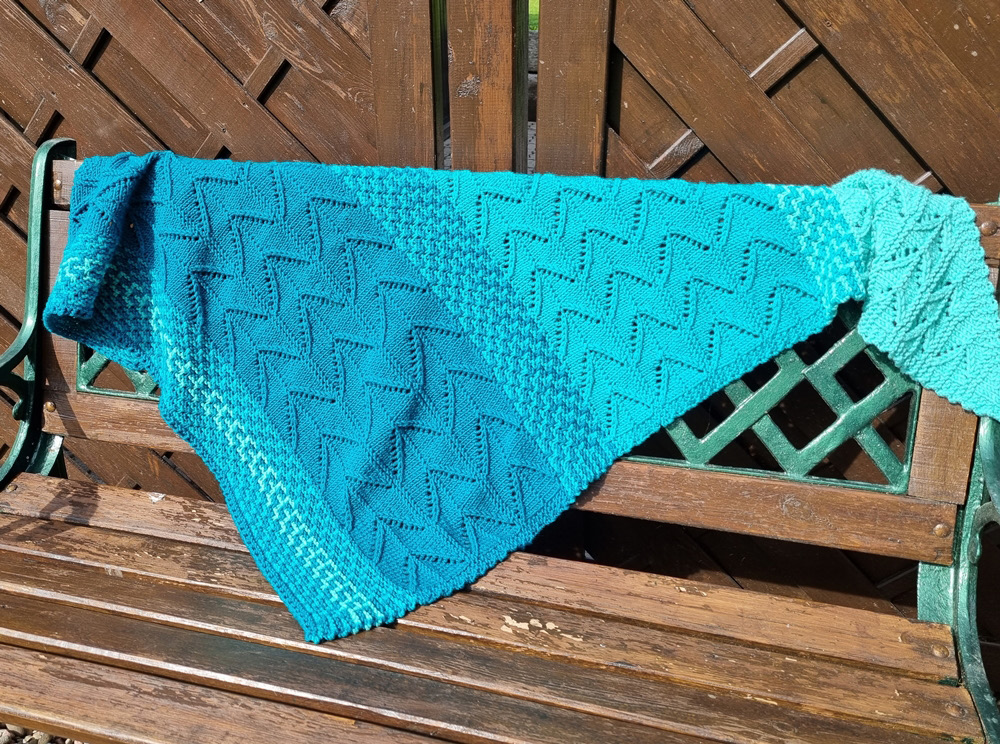
Are you ready to knit mosaic colorwork? All the patterns featured here showcase mosaic colorwork, and it’s not too late to join the Brown Sheep Mystery Knit Along to knit Olya Mikesh’s Mosaic Magic Shawl alongside other knitters! Head to Brown Sheep Company Crafters now for a sneak peek at the pattern!